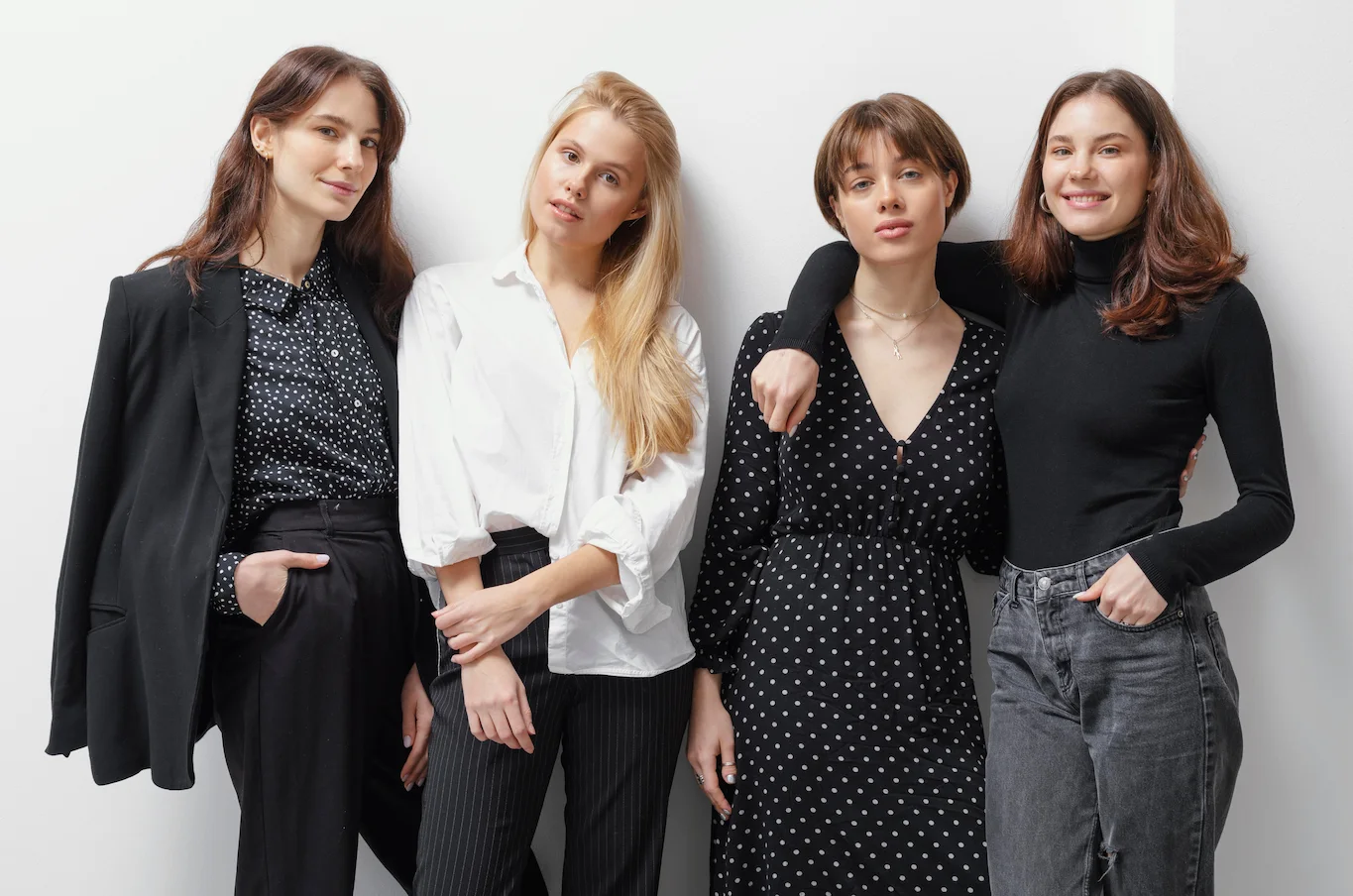
This donor has passed a rigorous medical examination to ensure absolute safety. Our screening process includes strict testing for infectious diseases (HIV, Hepatitis B/C, STIs), an evaluation of lifestyle habits, and a general physical assessment. We confirm the donor is currently in excellent health and free from transmissible conditions.
Assess your vision without corrective contact lenses
Do you wear contact lenses or have you had corrective surgery?
If yes, describe a problem:
What is the condition of your teeth?
Have you ever had braces?
Do you use nicotine products?
Do you drink alcoholic beverages?
If yes, how much alcohol do you drink?
Describe your diet
Estimate the level of nutrition:
Do you have allergies?
If yes, describe what exactly you are allergic to:
What is your sexual orientation?
How many children do you have?
Age at the time of the first menstruation:
The interval between menstruation is:
Have there been cases of multiple pregnancies in the family:
Please provide information about your biological relatives (indicate only natural hair and eye color):
Relative
Height, cm
Weight, kg
Eye color
Natural hair color
Primary medical history
Mother:
Father:
Complete the table
Family (which relative has the disease)
Age
Cause of death
Disease
The age at which was diagnosed
| Have you ever been diagnosed with or suspected of having any neurological disease (including dementia or degenerative /demyelinating disease of the CNS or other neurological disease of unknown etiology)? | No |
| Have you or any of your sexual partners ever been diagnosed with or suspected of having West Nile Virus (based on symptoms and/or laboratory results or confirmed WNV viremia), experienced symptoms of WNV infection? | No |
| Have you ever been exposed to known or suspected HIV, Hepatitis B, Hepatitis C infected blood or body fluids through skin inoculation, open wounds, non-intact skin or mucous membranes? | No |
| Have you or any of your sexual partners has had sex in the preceding 12 months with a person known to have HIV, clinically active HBV or clinically active HCV? | No |
| Have you or any of your sexual partner(s) ever received, blood, blood components, blood products, or other human tissues that are known to be possible sources of blood-borne pathogens? | No |
| Have you or your sexual partners been diagnosed with Zika virus in the past 6 months? | No |
| Have you travelled to an area with Zika virus transmission? | No |
| Alcoholism | No |
| Drug addiction | No |
| Alzheimer's disease / dementia before age 60 | No |
| Aneurysm | No |
| Fear / panic attacks | No |
| Attention deficit / hyperactivity disorder | No |
| Autism or Asperger's syndrome | No |
| Bipolar disorder | No |
| Blood coagulation disorders / hemophilia | No |
| Blindness before the age of 50 | No |
| Brain tumor / abnormality | No |
| Breast cancer | No |
| Cerebral palsy | No |
| Non-union of the lip or palate | No |
| Colorectal cancer | No |
| Flat feet | No |
| Depression | No |
| Epilepsy or seizures | No |
| Extra or fused fingers or toes | No |
| Genetic disorders | No |
| Hearing disorders / deafness under the age of 50 | No |
| Heart attack before age 50 | No |
| Heart defect | No |
| Huntington's disease | No |
| Immune disorders | No |
| Kidney defect / disorder / cancer | No |
| Intellectual disability / developmental delay | No |
| Melanoma | No |
| Mental retardation | No |
| Obsessive-compulsive disorder | No |
| Ovarian cancer | No |
| Pancreatic cancer | No |
| Parkinson's disease before the age of 60 | No |
| Pituitary disorder | No |
| Prostate cancer before the age of 50 | No |
| Schizophrenia | No |
| Speech disorders / lisping / stuttering | No |
| Split spine | No |
| Stroke under the age of 50 | No |
| Uterine cancer | No |
| Tourette syndrome | No |
| Vision disorders | No |
| Vitiligo / pigmentation disorders | No |
| Death before the age of 50, including childhood | No |
| Other cancer diagnoses before the age of 50 | No |
| Other congenital defects | No |
| Other health disorders | No |
| Diabetes | No |
| Hypertension | No |
| Rheumatoid arthritis | No |
| Pathology of the thyroid gland | No |
| Endometriosis | No |
“Big Five” personality traits of the Donor
1
Extraversion
2
Emotionality
3
Openness to New Experiences
4
Conscientiousness
5
Agreeableness
A
Psychological assessment of the donor:
This is not the first time the donor has participated in the donation program. She learned about the possibility of participating in the donation program from her friend, who shared her experience of participating in the surrogacy program. At first, the donor showed interest in donation to satisfy her own curiosity. She wanted to try it and find out from her own experience how the program works, what its essence is, whether it meets all the selection criteria, etc. Having gained the experience of donation, she understood the deeper meaning of it - it is a useful, charitable cause. She is pleased to know that she helped someone become parents.
The donor has been married for 4 years. Her husband works in an agricultural enterprise. They raise a 4-year-old son, who is an active, inquisitive, mobile boy. He loves to draw, jump, run, play active games. Obedient, recognizes parental authority, smart.
Her family for her is a dream come true, it is exactly what she wanted, imagined in her mind. They are friendly, positive, close and loving to each other.
The donor's parents divorced when she was 7 years old. And it was difficult for her to accept the fact that her father was not interested in communicating with her, was not involved in her upbringing, her life. When communicating with him, there is a misunderstanding, they have different views on life values, so a close relationship did not form.
The donor only says good things about her mother. She has warm and pleasant memories of her care, love, and support. She has always been a model of kindness, tenderness, and reliability for the donor. The donor is the youngest child in the family, so she received the most attention and warmth in her relationship with her mother. The donor has two sisters and a brother. One of the sisters is her best friend, a person with whom you can cry and laugh, and you can count on her support in any life circumstances. As a child, the donor was an obedient, calm, and well-mannered child. She was not capricious, she was non-conflict. She knew how to entertain herself and interest herself. She studied normally, and she liked studying the Ukrainian language the most. She liked to write beautifully, she loved to write works, dictations, and write every word in beautiful handwriting. She was also interested in mathematics and had developed logical thinking. She was engaged in dancing, attended a modeling and drawing club. She took an active part in school life, a regular participant in amateur art activities.
In her free time, her favorite pastime was relaxing on the beach of the Kiev reservoir. Where she would gather with friends, play volleyball, basketball, and swim.
Donor has been striving for financial independence and self-sufficiency since childhood. After 13 years, she got her first job – she worked during summer vacations from 5 am to evening in the field. She was proud of the first money she earned. Later, she worked as a bartender in a cafe. She is hardworking, persistent, and purposeful.
At 17, she became pregnant and gave birth to a son. She was unable to get an education after school. But she aims to enter a university, considers it necessary and promising to have a profession and education. She intends to get a medical education.
She is currently working on the creation and implementation of a garden project. She and her colleagues have developed and are now building a garden that will have a recreation area for visitors, a playground, a photo zone, a wedding arch, etc.
Her specialty is the ability, even when she is feeling bad, not to show it, to be friendly, to smile.
Her main achievement today is the purchase of her own house, where she and her child feel safe.
She dreams of buying a car and learning to drive it.
Donor can be described as a strong-willed, strong-spirited person who was overwhelmed by life circumstances. She learned early on to take responsibility for her own life, to be independent, self-reliant. This taught her to understand others in difficult situations, not to be indifferent, ready to come to their aid and support. In communication, she shows herself as an open, sincere, friendly interlocutor. Direct, with a sense of humor, correct.
Donor tested for over 100 genes.